
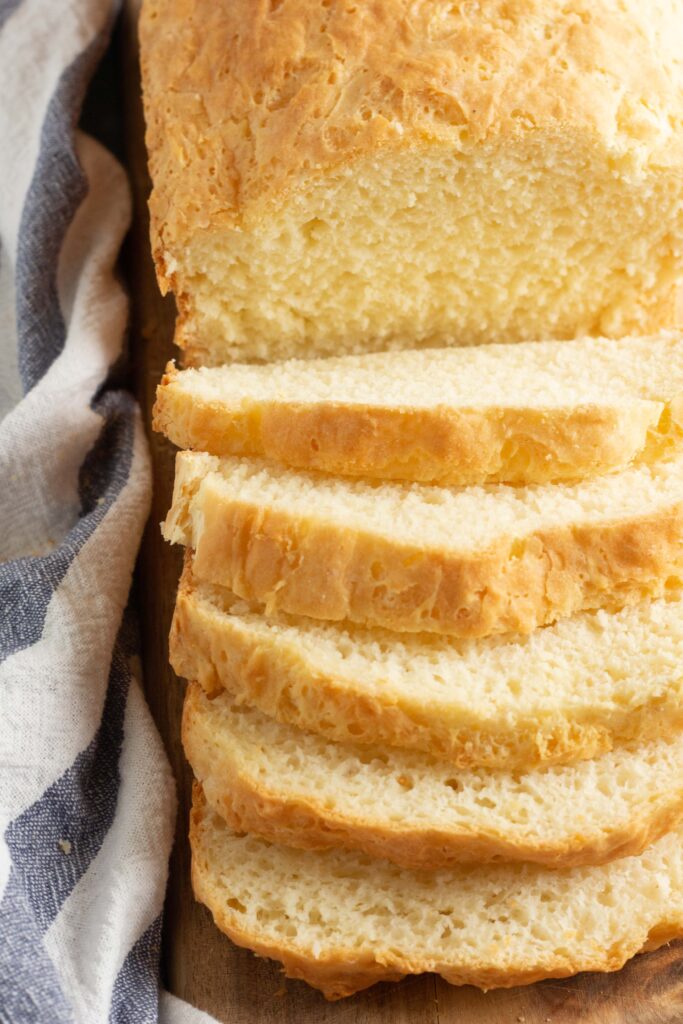
Nothing beats soft and fluffy gluten free bread fresh out of the oven! Stop settling for crumbly, tasteless bread and learn how easy it is to make your own with no kneading and only one rise.
Updated 1.30.2024 Same recipe, more comprehensive instructions 🙂
Have you been missing full-sized slices of soft, bendable, bread? If the answer is yes, then this gluten-free bread recipe is for you!
We've tried many a store bought variety, but they can be spendy and many don't even taste very good (but you can check out our list of favorite gluten free bread brands here)
I grew up on homemade bread and was so disappointed with the store-bought options for gluten-free bread, so I knew I had to create my own recipe that would taste good enough for our whole family to enjoy it.
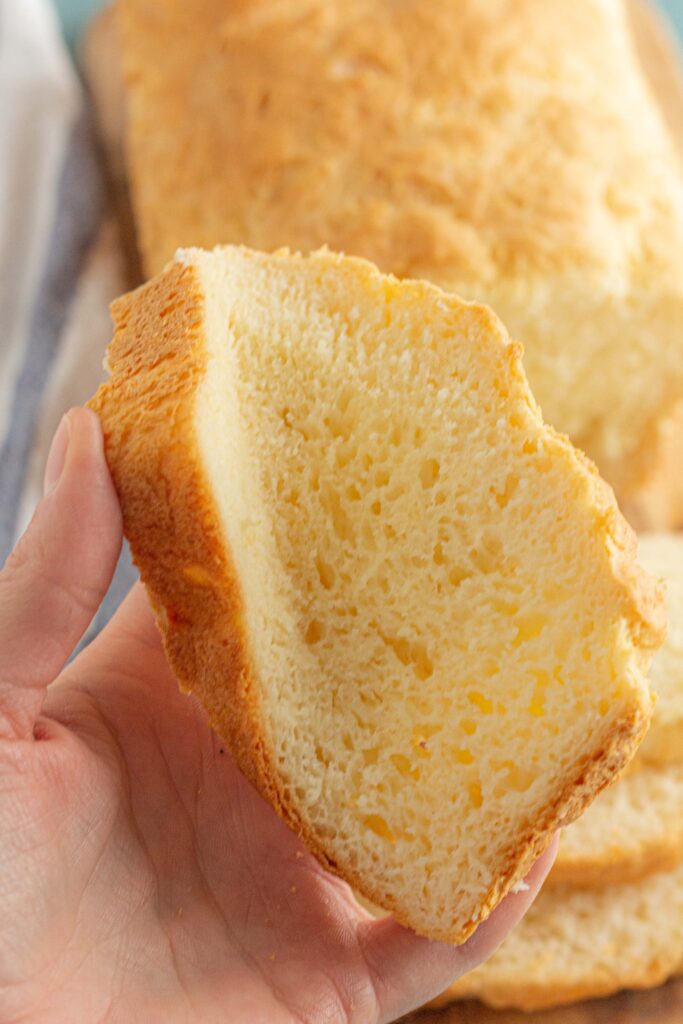
It took some effort and tweaking over the years, but I'm happy to report that my gluten-eating kids devour this bread when it comes out of the oven! It is soft and bendable and has the same flavor as a regular homemade loaf of bread.
You're going to LOVE how easy it is to make, too!
Table of Contents
WHAT MAKES THIS THE BEST GLUTEN FREE BREAD RECIPE?
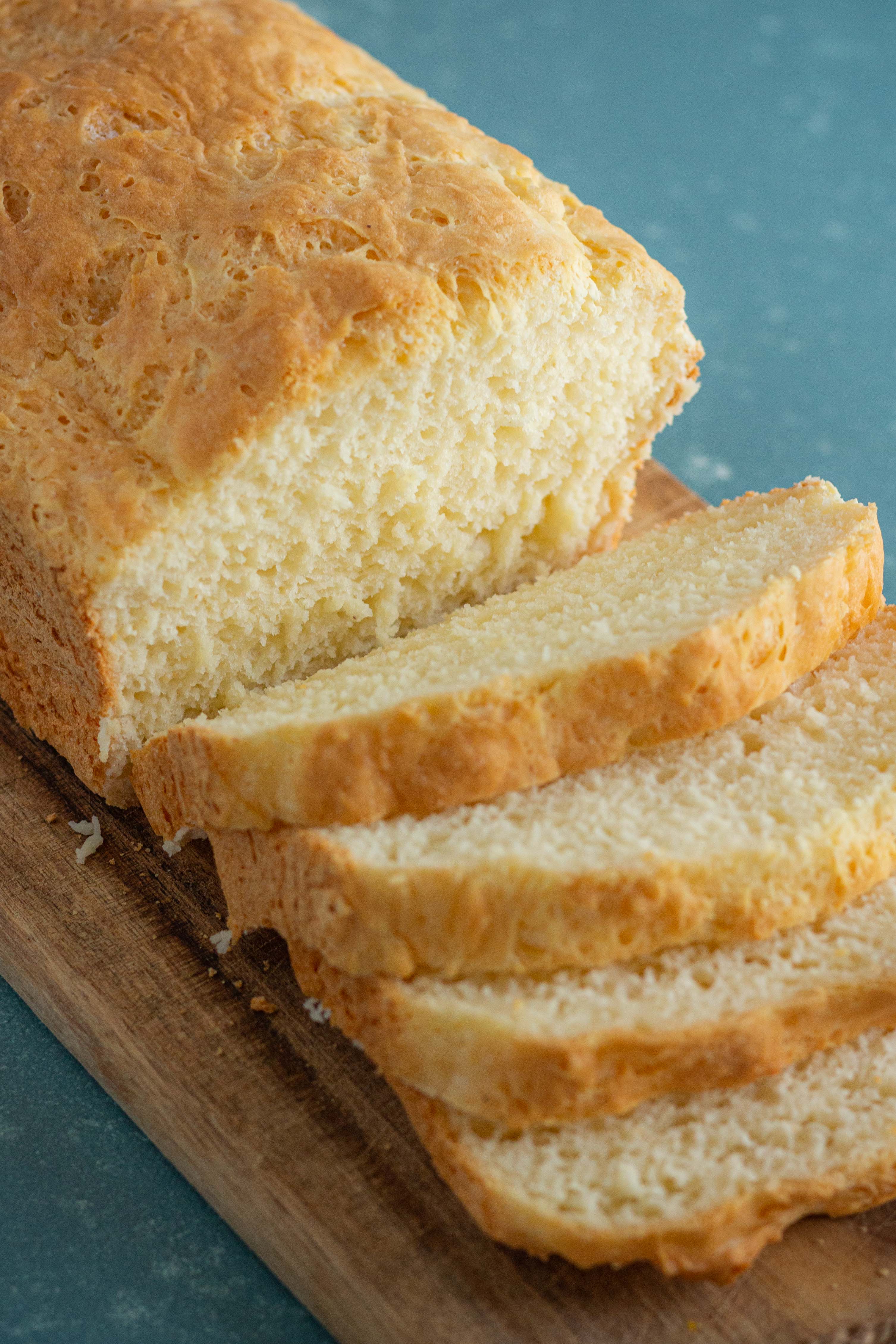
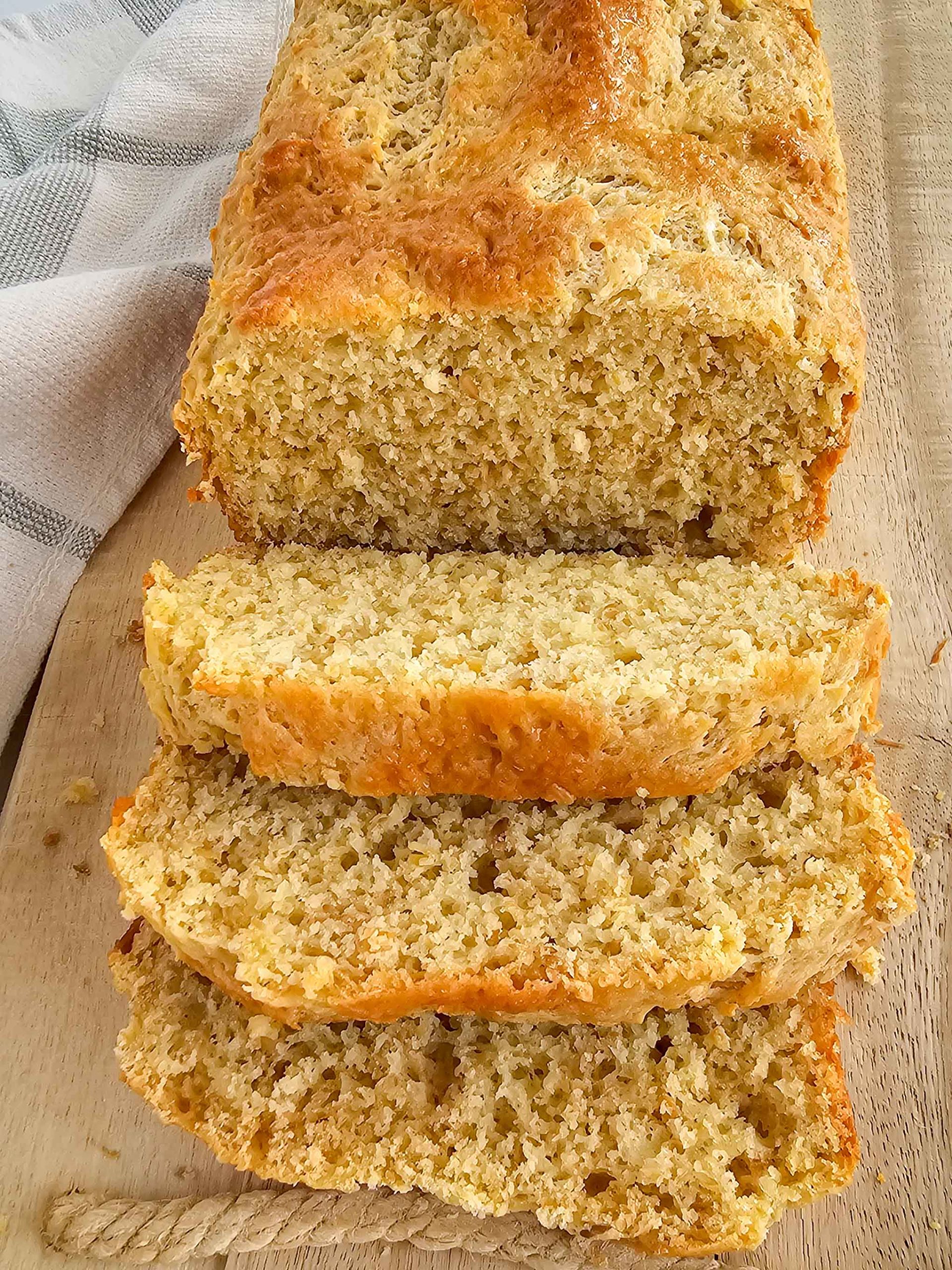
This gluten free sandwich bread isn't grainy or crumbly or gummy. It is soft and fluffy and has that yummy freshly-baked smell and taste.
You'll also love that it's easier to make than regular bread! With no kneading and only 1 rise, you'll be enjoying fresh-baked gluten-free bread in no time.
I did my best to replicate the recipe my husband's grandma passed along to me, and he agrees that this bread tastes just like hers. A decade later, we still bake a loaf almost every week.
You can use this gluten free bread any way that you would normally use bread. makes great sandwiches, grilled cheese, and french toast!
MY FAVORITE BREAD PAN FOR BAKING HOMEMADE GLUTEN-FREE BREAD
I sometimes use my Norpro 12 Inch Nonstick Bread Pan and others I use a standard size loaf pan. It really depends on what size you want your slices 🙂
WHICH GLUTEN FREE FLOUR WORKS WELL FOR BREAD?
A mixture of gluten-free flours and starches, combined with xanthan gum, work the best for gluten-free bread.
I use a gluten free flour mix that I developed which is very easy, inexpensive, and more nutritious than many pre-made blends you would find at the store. The recipe includes 3 different batch sizes and if you use the small batch it's just the right amount for this recipe.
I make a point of testing all the gluten free recipes on this site with a variety of gluten free flours so that I can share what has worked and what hasn't.
If you would like to use a pre-made blend, gfJules works the very best. It makes the softest bread with the highest rise! Better Batter is also an option, but I find it doesn't rise as much.
INGREDIENTS YOU'LL NEED TO MAKE GLUTEN FREE BREAD
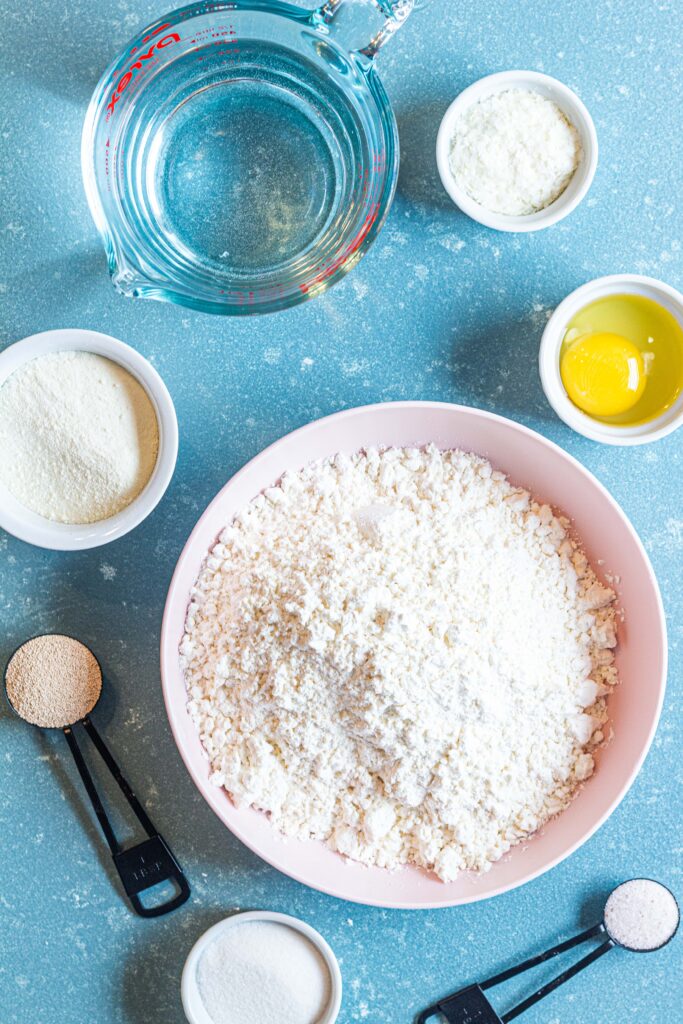
High Quality Gluten-Free Flour
In gluten-free bread making, the flour you use has a huge impact on your end result. I highly recommend using my homemade blend or gf Jules for this recipe as it will give you the lightest, fluffiest bread.
Yeast
you can use instant yeast or active dry yeast. Be sure to check your labels because not all yeast is gluten-free!
Sugar
Yeast requires sugar in order to activate. You can substitute with honey if you prefer.
Salt
If you're on a low-sodium diet, feel free to reduce the salt used in this recipe by 50%
Potato Flakes
Also known as instant potatoes. This is optional but does help improve the texture of gluten-free bread. If you're allergic to potatoes, simply leave these out.
Powdered Milk
Also known as instant milk. Find it in the baking aisle near the canned milk. If you're dairy free, you can substitute powdered coconut milk or leave it out.
Egg
If you're avoiding eggs, you can use an egg substitute. I've had great results with Bob's Red Mill egg replacer.
Butter
Use room temperature butter. You can also use a butter substitute or olive oil if you're dairy-free.
Warm Water
It is important that your water is the right temperature. Too hot and it will kill the yeast, too cold and the yeast will have a hard time activating. The water should be around 110 degrees F which is a bit warmer than room temperature.
***Amounts and instructions can be found in the recipe card below
HOW TO MAKE GLUTEN FREE BREAD
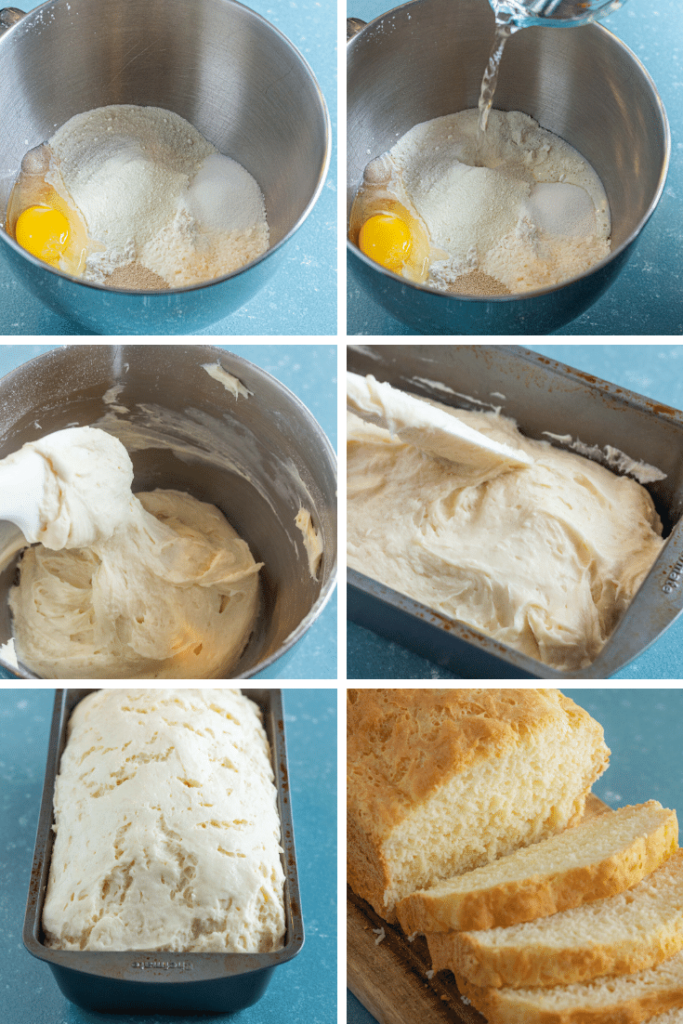
Bread making is an art, and baking gluten free bread is a different experience entirely, so I have included the step-by-step pictures and more detailed instructions below to walk you through the process.
If this is your first time making gluten free bread, you'll be surprised to learn that it's actually much easier than wheat bread! You'll measure the dry ingredients into a bowl, add the wet ingredients, mix with the paddle attachment of your stand mixer, shape, and let it rise once before baking.
There are a few important things to remember about gluten free yeast breads.
- There is no need for a second rise
- You don't have to knead the dough
- you want your "dough" to be more of a batter consistency. It's a little difficult to capture in a picture, but you can see that the dough is not thick enough to be shaped by hand, and is still quite sticky, similar to a thick banana bread batter.
This is such an easy recipe, you'll measure all ingredients into the bowl of a stand mixer (you can use a hand mixer, too), and mix for a few minutes with the paddle attachment.
Because your dough is soft and sticky, you don't need to use a dough hook and you will want to shape it in the pan. No worries, it will (magically) turn out just like any yeast bread would.
Be sure to grease your pan well because gluten free goods tend to stick a little more. Using a rubber spatula or wet hands, round the top.
Allow your dough to rise in a warm spot. I use the rapid proof setting on my oven.
Be sure to bake the bread thoroughly. If you under bake, the dough will have a poor texture and will sink after you take it out of the oven. Look for a nice golden brown color and bake for at least 50 minutes.
HOW TO STORE GLUTEN FREE BREAD
Like all fresh-baked breads, gf bread doesn't have a long shelf life and is best served the day you bake it. For best results, store your gluten free loaf at room temperature in a sealed bread bag for 1-2 days.
You can also freeze gluten-free bread for longer storage. I recommend slicing the loaf, then placing in a freezer bag. Be sure to remove as much air as possible.
When you are ready to enjoy a slice (or two), simply warm it in the microwave or pop in the toaster.
FREQUENTLY ASKED QUESTIONS
Why is Gluten-Free Bread so Dry?
There are a few reasons gluten-free bread can be dry.
- You may have used too much flour. To ensure you're measuring the correct amount of flour, use the stir, scoop, and level method.
- Using the wrong type of flour. There are lots of gluten-free flour options, and not all of them work well for breads! While Bob's Red Mill 1:1 is a popular option for gluten-free baking, it does not work well in gluten free bread. Be sure to use a gluten-free flour blend that is formulated for breads, such as my homemade blend or gfJules.
- Expecting gluten-free bread dough to be the same as regular bread dough. Gluten-free bread dough should be sticky, similar to a thick banana bread batter.
Does Gluten Free Bread Dough Need to Rise Twice?
Gluten free bread only needs to rise once and does not need to be kneaded.
What Should the Consistency of Gluten Free Bread Dough be?
Gluten-free bread dough should be sticky, similar to a thick banana bread batter.
My Gluten-Free Bread Rises, then Falls After Baking
If your gluten-free bread rises but then falls after baking, you might need to bake longer and/or add a little more flour to the dough.
How Can I Tell When Gluten-Free Bread is Done?
The best way to tell if gluten-free bread is done is by taking its temperature. The loaf should be around 210 degrees F and the crust should be a golden brown color.
Can You Knead Gluten-Free Dough?
Gluten free dough does not require kneading because it doesn't contain gluten. Instead, gluten-free bread dough is combined with a mixer, shaped, then allowed to rise once before baking.
My Gluten-Free Bread Didn't Rise at All
There are a few reasons your gluten-free bread dough didn't rise. The most obvious reason is that your yeast isn't fresh. To test your yeast, add 2 ¼ teaspoons yeast and 1 teaspoon sugar to ¼ cup warm water (about 100 degrees F).
Allow the yeast mixture to rest for 10 minutes. It should become bubbly and double in size. If this doesn't work, it's time to head to the store and get some fresh yeast.
Another reason your gluten-free dough didn't rise could be that you may have incorporated too much flour into the dough. The dough should be more like the consistency of a thick banana bread batter than a traditional dough and if it's too thick, it will not rise well.
Try placing your bread dough in a warm place such as on top of an oven that is turned on, or inside an oven with the proof setting.
Can I use a Bread Machine?
I have tested this recipe with a standard bread machine using a gluten-free setting and it definitely did not turn out as well as the oven method. Because this recipe is so easy with no kneading and only one rise, I feel like it's worth it to bake in the oven.
Is Gluten Free Bread Actually Healthier?
If you are eating a gluten free diet because you have celiac disease or another medical condition that requires it, then gluten-free bread is obviously the safe option and making your own is probably healthier than what you would buy in the store.
If you don't have a medical reason to eat gluten-free, than gluten free bread is actually not any more healthy. In fact, it can contain less nutrients and more simple carbohydrates because of the starches required to create a soft texture.
WAIT! Don't lose this post! Save this image on Pinterest
Making this recipe? Please leave a star rating! I love hearing from my readers and your reviews help more people find gluten-free recipes that actually taste good.
Connect with me on Instagram, Pinterest, and Facebook
We would love to see what you create! Snap a photo and tag @LifeAfterWheat on social media!
If you love this recipe, you might also like...
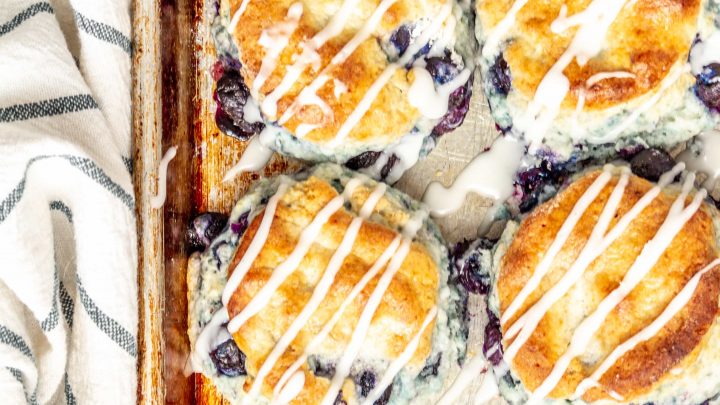
Blueberry Biscuits {gluten free}
Perfect for breakfast or brunch, these beautiful gluten free blueberry biscuits are perfectly light and fluffy, slightly sweet, and studded with blueberries.
THE BEST GLUTEN-FREE BREAD RECIPE
Gluten Free Bread
Ingredients
Equipment
Method
- Measure flour by stirring the flour, scooping into measuring cup, and leveling with the flat end of a knife. Add all ingredients to bowl of stand mixer (you can also use a hand mixer) in order listed.
- Mix on medium speed for 3 minutes. It should be the consistency of a thick and sticky batter, like a banana bread that has too much flour. Add additional water or flour 1 T at a time if needed to attain this consistency. Refer to the photos in the post to see what the consistency should look like.
- Grease bottom and corners of a loaf pan. I use butter.
- Spread batter in loaf pan, peaking the middle a bit lengthwise instead of spreading flat.
- Cover lightly with plastic wrap sprayed with cooking spray or oil and let the bread rise in a warm place until loaf has almost doubled in size. I use the rapid proof option on my oven and it takes about 25 minutes.
- Preheat to 350°.
- Bake for 45-50 minutes, until bread looks firm and is a nice deep golden brown on top. If you take it out too early, it will fall as it is cooling.
- Brush the top with butter.
- Let the bread cool for 10 minutes in pan.
- Invert onto a cooling rack and allow to cool completely before slicing.
- Be sure to enjoy it fresh! It is best this way.
- The best way to store gluten free bread is to slice, place in a Ziploc freezer bag, remove all the air, seal, and freeze. You can then remove a slice and pop it in the toaster or microwave as you need. It might help to put pieces of wax or parchment paper between the slices so they don't stick together.
- Once you have frozen the bread, it's best toasted or warmed in the microwave for 10-15 seconds. I don't recommend refrigeration as the bread tends to crumble easily.
Nutrition
Notes
- I recommend using gf Jules gluten free flour or my blend in this recipe.
- When measuring flour, always stir, scoop into your measuring cup, and level off.
- The psyllium husk powder is optional, but aids in elasticity of the dough and bread.
- For dairy free, use olive oil or a dairy-free butter substitute and powdered coconut milk (or omit the powdered milk)
- for egg-free, use an egg replacer. I love Bob's Red Mill egg replacer for this recipe.
- Yeast needs sugar in order to activate, so don't leave it out. You can use honey if you prefer.
- If you can't tolerate potato flakes, simply leave them out.
1 cup brown rice flour, sorghum flour, or a combination of the two (I usually use half and half)
⅔ cups potato starch (not potato flour)
⅔ cups tapioca starch (also called tapioca flour)
1 tablespoon xanthan gum (you can substitute guar gum but it doesn't work quite as well) Directions: whisk together in a large bowl.
Mel says
Looking forward to making this bread! What attachment do you use to mix the dough with? You mention whisking the dry ingredients but in the picture it looks like the paddle or is it the dough hook? Thanks!
LifeAfterWheat says
Great question Mel, I use the paddle attachment.
Only taste matters. says
Thank you! I really miss just being able to bite into a sandwich.
LifeAfterWheat says
You're welcome Elle, enjoy some soft bread fresh out of the oven!
Bethany says
Wow, this bread look so, so good! Pinning!
LifeAfterWheat says
Thanks Bethany, enjoy!
Pat Diwning says
I just made my first loaf of your wonderful Sandwich bread and it turned out really great! Thank you for sharing this recipe. I have tried so many recipes from the Internet and they all went right into the trash! I was so surprised how soft and flexible this bread is. It had been so long since I have had any bread at all. I was diagnosed with celiac disease this past year and finding this recipe has been a real blessing. I have baked wheat breads for years with lots of success but gluten free breads have been a challenge. I followed your directions and it came out perfectly! Thanks again! God Bless! Pat
LifeAfterWheat says
Thank you so much for letting me know Pat, this is the reason I have the blog and I'm so glad you loved it. Keep baking! ~Celeste
Nathalie says
Can the potato flakes be substituted for something else? I'm following the hypotoxic diet to treat my arthrosis and potato flakes/flour are to be avoided as they produce glycotoxins when heated at more than 110 degrees celsius (around 225 farenheit) which is bad for inflammatory diseases.
LifeAfterWheat says
Great question Nathalie, you can just go ahead and leave the potato flakes out, it will taste just about as good. Enjoy!
Tina says
Hi, I have made your original version several times and it was awesome! I just went to grab the recipe I had pinned and noticed you have changed it. I made the new version as written and while it rose beautifully on my counter, when I put it in the oven it fell flat 🙁 Could I please have the original recipe so I can write it down???
LifeAfterWheat says
Hi Tina! The only difference is added instant milk and potato flakes, the recipe is the same otherwise. If the bread rises too high, it sometimes falls while it's baking so that might have been what happened. Hope that helps! ~Celeste
Carrianne says
Can I leave out the instant milk? I made the original recipe years ago and it didn’t have that. We love to use this for French toast.
thereislifeafterwheat@gmail.com says
The powdered milk adds depth of flavor and helps the bread brown, but you can leave it out 🙂
Susan Polesel says
Hi, I have made the original recipe three times. I used a Norpro 9-3/4 inch pan two times. Both times the sides deflated inward, the top didn't deflate. I baked the loaf until the internal temp was 207 degrees. Did I leave it in the pan to cool too long? Help -- it tastes good but looks funny! Susan
LifeAfterWheat says
Hi Susan, I have a few ideas for you, let me know if you've tried them. First, which flour did you use? gluten free flours are so different that they can affect the finished product. Second, was the loaf a very golden brown? I don't use a thermometer (I know, I know :)) but rely instead on the color for this recipe because it seems to take longer to bake than it would if you relied on temp. another suggestion is perhaps it rose too high before you baked it. Let me know if that helps!
Christie @3wholepeas says
This bread looks delicious! I've been wanting to make my own loaf for a while and now I have no excuse to not...thanks for sharing.
thereislifeafterwheat@gmail.com says
Thanks Christie, we make it all the time and even the gluten eaters in our house love it. Enjoy!
Chrystal @ Gluten-Free Palate says
I can't wait to make this bread for my girls!! Thank you.
thereislifeafterwheat@gmail.com says
I think you will all love it Chrystal, thanks!
Kim says
I already have powdered buttermilk for another recipe that calls for it...wondering if I could use that for the milk powder? Thanks!!
thereislifeafterwheat@gmail.com says
Powdered buttermilk is a little different than powdered milk, but I have made this recipe without and it works just fine. Just be aware that the flavor is a little more rich with the powdered milk 🙂 Happy Baking Kim!
kim says
Thank you so much for your prompt response and your patience. I was able to find powdered milk at my local Wal-mart...it's skim, fat free...is that ok or is the fat needed?
thereislifeafterwheat@gmail.com says
All the ones I've seen are skim, so that should be perfect!
Estefany says
Hi there ! This will be my first time trying to make gluten free bread that looks like that! I'm excited, I don't have a stand mixer though, I have those old school standard mixers with the 2 wands ...Will this work ?
thereislifeafterwheat@gmail.com says
Yes, the dough is soft enough that should work. You can also mix well by hand if needed.
Jen says
I just made this and the batter was runny. I kept adding tapioca starch to thicken it. Also, it raised so much in the oven that it ended up spilling all over the bottle of my oven. What did I do wrong?
thereislifeafterwheat@gmail.com says
Hi Jen,
I'm so sorry it didn't work out! It sounds like there was too much liquid or not enough flour, which would cause it to be too thin and also rise too much. Humidity could also play a part in it. Do you mind me asking what flour you used?
Jen says
I did what you mentioned with half brown rice flour and half tapicoa flour, everything else I followed . The only thing I did was when it was mixing and it was runny, I added a little bit of tapicoa starch each time until it was thicker.
thereislifeafterwheat@gmail.com says
The only thing I can think of Jen is that your humidity is quite higher. The flour mix I suggest making does have a little more flour than starch, so that might have been it? I hope you try it again, and if it's too soft add more flour mix instead of just the tapioca which will thicken it more.
Irene says
I just made your sandwich bread in my bread maker
I put the wet first, then the dry and sprinkled the yeast on top.
Make sure your water is not too hot.
The texture was great.
The bread hot out of the bread maker was great with a little butter
It looks and tastes like white bread.
I have a gluten free setting, but I like to use the dough setting,then the bake setting
????GREAT RECIPE???????
thereislifeafterwheat@gmail.com says
Thanks for letting us know, I have never tried it in the bread maker! I'm so glad you enjoyed it Irene! -Celeste
Linda Borst says
What makes a bread cave in, in the middle?
thereislifeafterwheat@gmail.com says
Hi Linda, it could be caused by too long of a rise (this recipe rises very quickly), the need for additional flour, or pulling out of the oven before it's completely done. I hope that helps! -Celeste
Angel says
H. Should you whisk the egg whites before adding to the mix?
thereislifeafterwheat@gmail.com says
Great question, Angel! No need to whisk first, just add them straight in 🙂
Shirin says
Thanks for sharing but what can you substitute the dry milk with for lactose intolerance
thereislifeafterwheat@gmail.com says
Hi Shirin, great question! The dry milk helps the bread brown up nicely in the oven and gives it a richer flavor. Feel free to leave it out if you can't do lactose, the bread will still taste great! -Celeste
Linda says
I have tried this recipe two times now. Both times the bread rises but falls while still in the oven. I am not new to bread making but I can not figure out what I'm doing wrong. Any suggestions would be greatly appreciated. By the way love the taste of the bread but I always have about 1/2 inch on the bottom that is gummy. I have not taken it out earlier than the 35 minutes usually around 40-45.
Thanks
thereislifeafterwheat@gmail.com says
Hi Linda, I'm sorry the bread hasn't been turning out. I would add some extra flour (maybe about 1/4 cup) and try baking for 50 minutes. Let me know if that helps! -Celeste
Mary says
Hi! Is there anything to substitute for xantham or guar gum? I can’t do gums. Thanks!
thereislifeafterwheat@gmail.com says
I haven't tried any of these options so I can't guarantee the results, but here's a helpful list of substitutions you can try 🙂 https://gluten-free-bread.org/make-substitutions-xanthan-gum-baking
Please let me know how it goes! -Celeste
Susan says
I don’t have the particular pan but have other loaf pan sizes. What other size could I use? Could I split the recipe between two pans? Also if I leave out the milk powder what else should I put in it’s pkace? Thanks so much
thereislifeafterwheat@gmail.com says
An 8x4" pan will work, and you can just omit the dry milk powder 🙂 Enjoy! -Celeste
Susan says
Will leaving out the milk powder make the batter runny? Have you ever used evaporated coconut powder instead? Just don’t want to waste ingredients. Thanks
thereislifeafterwheat@gmail.com says
I haven't tried using coconut milk powder, but my guess is it will work - you just might have a slight coconut flavor. You can just omit the milk powder, it shouldn't affect the consistency much at all. -Celeste
Monica Davis says
This looks amazing! I can't wait to try it! It's so hard to find a good gluten free bread that you can also make vegan!
thereislifeafterwheat@gmail.com says
So true, Monica! Hope you enjoy it 🙂 -Celeste
Suzanne says
This looks INCREDIBLE! My husband is going to love it. Thanks for the recipe and all the pictures!
thereislifeafterwheat@gmail.com says
So excited for you both to try it, hope you enjoy it! -Celeste
Megan says
I made this today and while the bread is amazingly delicious, there was a huge hole running through the bread when I cut through it. I baked it for the whole 30 minutes.
Bev says
Bread falls in the middle while baking what am I doing wrong
thereislifeafterwheat@gmail.com says
Hi Bev, make sure you are baking long enough and consider getting an oven thermometer to test your oven temp. Also, the batter might be a bit too thin. If that is the case, try adding just 2-3 T flour.
Rita says
I tried your recipe. My loaf of bread was heavy enough to be a doorstop! This is no bad reflection on you, it's the nature of the gluten free beast. I tweaked your recipe to accommodate my taste and preference. I don't know who 'They' are that decided that xanthan gum had to be used in such high quantities, but, in my opinion, xanthan gum can be cut WAY BACK!! Which I did with your recipe! Then I added 1 1/2 Tablespoons of vinegar instead of 1 teaspoon. The end result was a sourdough tasting bread which was light enough that it wasn't confused with a doorstop ! Again, nothing against you at all. Our gluten free lifestyles are different and our breads are going to be different! That's part of gluten free living. I used only 1 teaspoon of xanthan gum for your recipe and am considering cutting it back even further. But, I like your recipe and will use it for all of my bread needs. Thanks for posting it!
thereislifeafterwheat@gmail.com says
Thank you for sharing your adjustments Rita!
Amber Hansen says
I just made this gluten free bread alongside a traditional bread for my Food Sciences Lab class in college. I have a gluten intolerance so I couldn't try the traditional one, but my family did. They tasted practically the same. The only difference was that yours was a little sweeter from the butter, which I preferred anyway, and the weight of the loaves. Your recipe is amazing! Hands down the best bread I have ever tasted! Thank you for taking the time to perfect this recipe.
Gary says
I made bread today and because of distractions left the bread to rise for about 2hours. It looked to be very porous before cooking. Then in the oven at 350 and was distracted again. It was about 2 1/2 hours, and was smelling great, then I remembered, oh my bread! I took it from the oven, the loaf was a light golden brown and crust was a brick. Had to at least try a piece, so I cut a slice and found that everything but the thick crust was almost like a heavy batter consistency. Not quite liquid, but had not cooked. By now the term brain dead comes to mind. Any suggestions? I am going to try again tomorrow following recipe to the letter. Sorry for the inconvenience. I appreciate your time and patience. Thank you
thereislifeafterwheat@gmail.com says
Sounds like a second run will help Gary, hope you enjoy it 🙂
Gary says
Good afternoon. My questions are, instead of powdered milk can scalded whole milk be substituted, and at what amount. Second question is, instead of potato flakes, can a mashed or whipped baked potato be substituted, and again, what amount. The reason I ask is that powdered milk, along with potato flakes cause severe GI distress for me. I am not sure how they are processed or what the manufacturer adds to them, but I cannot tolerate either. Forgot to mention that I have tried several brands of each. Thank you for all your help.
thereislifeafterwheat@gmail.com says
Hi Gary, feel free to omit those two ingredients as they aren't critical to the bread. They just add a bit of additional flavor/richness.
Lori says
How do I mix the dough if I don't have a stand mixer? Every recipe I have found uses a stand mixer when all I have is an electric hand mixer. Also, my gf flour already has Xanthan Gum in it. Do I need to add more?
thereislifeafterwheat@gmail.com says
A stand mixer really works well for this and many other recipes, but I have had readers tell me they used a hand mixer without any problems because the dough is so soft. As for the xanthan gum, it depends on the flour. Let me know which flour you're using and I'll reply back 🙂
Wendy says
Hi! I was wondering if you have ever added any additional ingredients, like cinnamon and raisins, and if so did it affect the texture and baking process?
thereislifeafterwheat@gmail.com says
I have added cinnamon and had no issues, haven't tried raisins yet. I would just caution to avoid using too much as that could affect the rise.
Melissa says
This is the absolute best bread and my go-to recipe now! It is so much better and cheaper than store bought. It’s texture is amazing and so is the taste. Plus it comes together very quickly!
thereislifeafterwheat@gmail.com says
So good to hear, thanks for sharing Melissa!
Gary Staffeldt says
Can you substitute milk for water in the bread recipe?
thereislifeafterwheat@gmail.com says
I prefer to use powdered milk, but you could try adding milk if you would like.
S says
Have you ever tried this recipe with Domata Gluten free flour (https://www.domataglutenfree.com/) and if so how did it work?
thereislifeafterwheat@gmail.com says
I haven't used that particular flour.
Bob W. says
Am planning on trying this recipe Friday. I use Bob’s red meal 1to1 flour whichhasxantham gum in it. Do I still need to add more.
thereislifeafterwheat@gmail.com says
Bob's Red Mill flour doesn't work well in this recipe. GF Jules is by far the best and I highly recommend it.
Jen says
We love this bread at our house! Thanks for a great recipe! Has anyone ever tried doubling this? I'd like to be able to make one loaf for dinner and one to freeze, but I am always hesitant to try it and waste expensive GF flour!
thereislifeafterwheat@gmail.com says
Yes, doubling works! I often do that and freeze the extras.
Ian Proverbs says
Made the sandwich bread today using Domato ready to bake flour.
Excellent result with "real white bread" feel and taste.
thereislifeafterwheat@gmail.com says
So glad you liked it!
Steve C says
Tried this recipe, and it’s wonderful! Is there a way to make the load taller though?
Mary says
This is the best gluten free bread I have ever had.My kitchen smelled like a bakery when it was in the oven. It reminds me of the Old Fashioned White loaf I used to buy at The Great Harvest Bread Company. The family LOVED it. Great texture, didn't even have to toast it. Winner!!
thereislifeafterwheat@gmail.com says
So glad you enjoyed it!! XO Celeste
shelly says
Can I use this recipe in my bread machine? It has a GF setting.
thereislifeafterwheat@gmail.com says
I haven't tried this recipe in the breadmaker yet.
Lou says
This bread is so fabulous. I make it a lot. Easy easy and always perfect!
Thanks so much for a great recipe.
thereislifeafterwheat@gmail.com says
So glad you're enjoying it!
Hilda Lovern says
I was so looking forward to baking this bread for a friend of my daughter's who is gluten sensitive and is currently recovering from surgery. I used gf Jules flour and bought instant yeast so it should be fresh. I used a 9x5 pan and it jut rose to the top of the pan. I baked it for 45 minutes but it did not brown. I left it for an additional minutes and it barely browned and mostly around the edges. When it finally cooled I sliced it and ate a slice. It had no flavor, I froze the rest and the next morning I tried a toasted slice with butter and jam and I still did not detect any flavor. Should I have added xantham gum to the recipe, I assumed the flour had all it required? I hated to throw it away, the flour is expensive.
thereislifeafterwheat@gmail.com says
Not sure what you mean by no flavor? A couple of times I have forgotten the salt and it definitely didn't taste as good, any possibility that might have happened?
Hilda says
I did use the salt. When I took a bite of a slice there was no taste to the bread. I didn’t add xanthan gum because the flour had the gum. I was hoping that it would look similar to yours but there was absolutely no resemblance. I’m not sure what I did wrong.
thereislifeafterwheat@gmail.com says
Did you make any other substitutions? Did you use powdered milk and egg and was the batter similar to the photos in recipe post? As for the appearance, you could try testing the temp of your oven by getting an oven thermometer.
MIa says
I have a question about the yeast. I made the bread and it smells amazing! However, it was very bitter and tasted like yeast. I placed 1 tablespoon of instant dry and I am wondering if this is too much. Maybe it should be 1 teaspoon? Can you provide in grams?
thereislifeafterwheat@gmail.com says
It is 1 tablespoon. You can try reducing to 2 teaspoons and/or allowing for a longer rise time in a place that isn't quite as warm.
Sheryl Nathan says
Hello from New Zealand - I don’t have a very good oven, so was hoping I’d be able to make this in my breadmaker - which has a Gluten Free option on it????
Many thanks
thereislifeafterwheat@gmail.com says
Hi there! What kind of bread maker do you have? Some are better than others, even with the gluten free option. Gluten free bread should only rise once, so you want one that will allow for that with the gf setting.
Julia says
Could you please post your recipe for gf flour
thereislifeafterwheat@gmail.com says
You can find it here: https://thereislifeafterwheat.com/2014/10/gluten-free-flour-mix/
Sarah Traver says
I made this today and it came out Great! I used Bob's Red Mill GF 1 to 1 Baking Flour and added seaseme seeds during the rise. Turned out moist and crunchy. I also made my homemade honey butter and put some out and even more flavor. I Love this recipe 😋 ❤️
Sarah Traver says
Made this today and came out Great! I used Bob's Red Mill GF Baking flour and added 3 extra TBS of the flour and added seaseme during the rise. Spongy and crunchy 😋 😍
Paula says
Do you have a recommendation for a replacement of the 1/2 cup dry milk powder for a dairy free option?
thereislifeafterwheat@gmail.com says
You can use a powdered coconut milk.
Cindy Kennedy says
You mention that this is a sandwich bread but then say to freeze and toast it. Do you use it untoasted for sandwiches or only toasted? If you eat it for sandwiches how does it do? Does it hold together well not fall apart? I am looking for a bread that will work for non toasted sandwiches.
Thanks!
Celeste Noland says
It holds up great the first day or so, then does better if warmed in the microwave or toasted. My husband toasts the bread slightly before making sandwiches to pack in lunches and it does great!
Janet says
This was great. The instructions were very explicit which really helped because I've never baked with gluten free flour. I used Namaste Flour Blend & had to switch ovens before the cooking time was done & thought it was ruined. It needed to proof in my oven about 3 times as long as the given time, but with the instructions that it should almost double in size, I left it in longer. I realized too late that I had active dry yeast, so used water at 140 degrees & crossed my fingers. It did fall a little after taking it out, but not bad. With the instructions to not remove it until it was golden brown, made me realize it needed a lot more baking time than given in the instructions, at least for my situation.
Anyway, it turned out great & I'm going to make this again. It has a kind of nutty flavor & the texture is like in the picture. Pictures were also helpful.
Thank you for posting this:)
Cathy says
I've made gluten-free bread a few times and most of the time it tastes like eggs. Then I found a recipe that used psyllium husk and that turned out okay but it made the bread a unique color. I was skeptical when I tried this one because it didn't call for psyllium husk so I didn't think it would rise but I will say it is the best homemade GF bread that I have ever made! Thanks for sharing.
Celeste Noland says
Yay for enjoying bread again! Thanks for coming back to leave a comment 🙂